
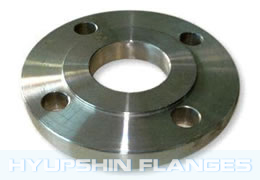
The facing is the part of the flange that seals against the gasket. Choosing the wrong facing is a common reason for leaks and mismatched equipment.
Raised face (RF)
The sealing area is raised above the bolting face, so the bolt load is concentrated on the gasket. RF is the most common facing for ASME flanges in process piping. It is used with spiral wound, non-metallic and other flat gaskets.
Flat face (FF)
The sealing face is level with the bolting face and the gasket covers the full face. FF flanges are required when mating with cast iron or other brittle flanges and equipment, because a raised face could crack the mating flange when the bolts are tightened. They are also common in water and low-pressure services.
Ring type joint (RTJ)
A groove is machined in the face to hold a metal ring gasket. RTJ flanges are used for high pressure and high temperature service, typically in oil and gas. Groove dimensions and finish must match the ring number.
Surface finish
Raised and flat faces are normally machined with a serrated spiral finish that grips soft gaskets. Smooth finishes are specified for some metal gaskets. If your project has a specific roughness requirement, state it in the RFQ.
In EN 1092-1
European flanges use facing letters: Type A (flat face) and Type B1 or B2 (raised face) are the most common.
About Hyupshin Flanges
Shandong Hyupshin Flanges Co., Ltd has manufactured forged steel flanges since 1988 and exports more than 90% of its production. Monthly output is about 2,000 tons, with a supply range of DN15 to DN3000. Orders are supplied with EN 10204 3.1 material certificates, and third-party inspection can be arranged. Certifications include ISO 9001, Korea KS, CE PED, UKCA, AD 2000, LRQA.
See the flange facing types and finishes, or send your RFQ, drawing or item list. Minimum order is 1 ton or 100 pieces.